
CSS frameworks · Framework 04 of 08
Nothing Leaves Unsigned
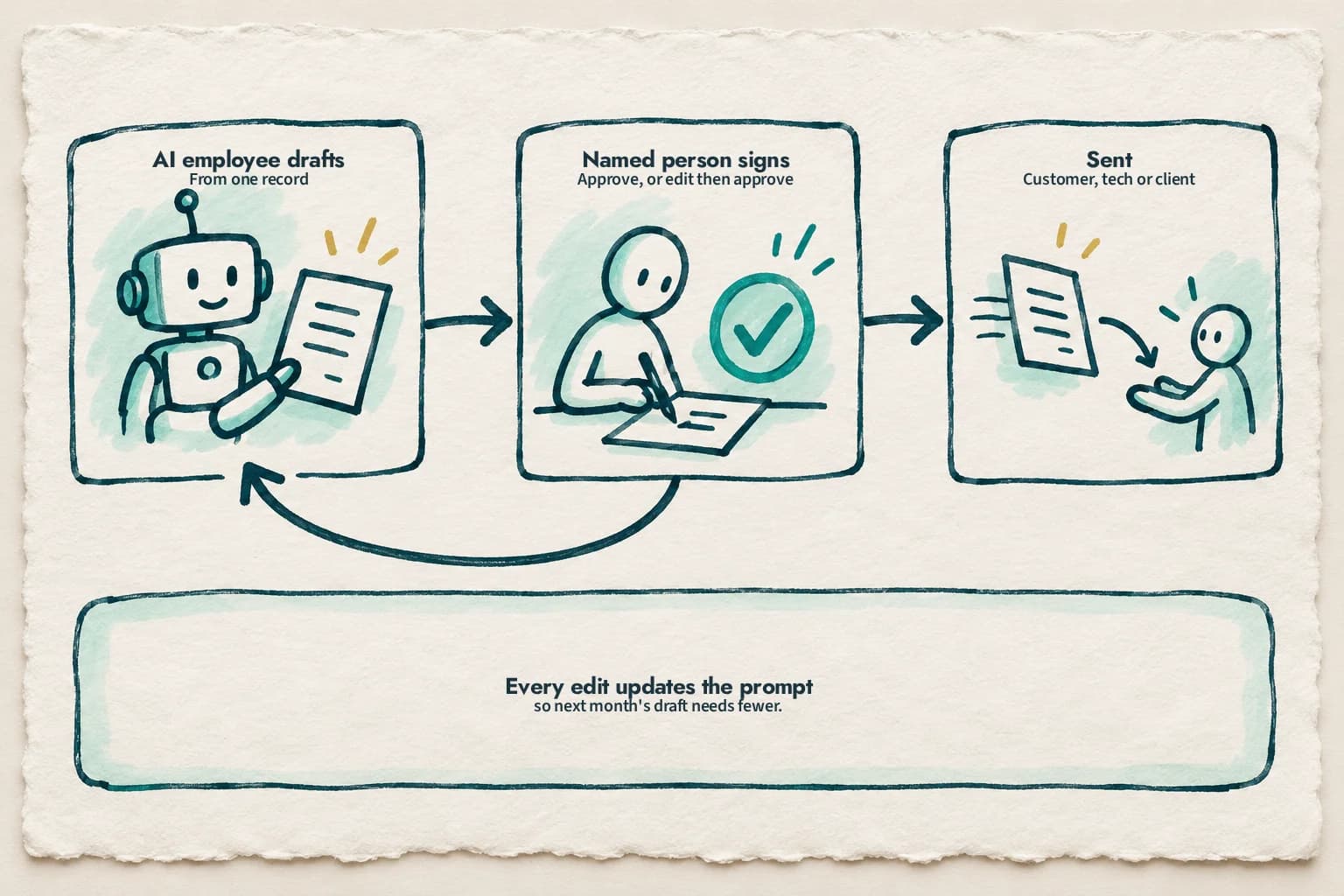
AI drafts, a named person approves, and every edit teaches the next draft. The loop is the product; the model is a part.
Why it matters
The fear is reasonable: an AI that texts a customer the wrong time, or quotes a price it invented.
The fix isn't a better model, it's a loop where nothing reaches a customer, a tech or a client until a person whose name is on it taps Approve.
The second half is what makes it pay: every edit that person makes goes back into the prompt, so next month there are fewer edits and the approval takes seconds.
How we apply it
- Each AI employee has exactly one job and one named approver, recorded in the permission register.
- Drafts land in a review queue in the tools your team already uses, with the record they came from.
- The approver approves, or edits and approves. Nothing sends on its own.
- Every month we read the edits, update the prompt or skill, and report the trend.
The number
| Measure | Cadence | Baseline |
|---|---|---|
| Approval rate (approved without edit) | Monthly | Month 2 of Implementation |
| Edit rate, and what the edits were | Monthly | Month 2 |
| Time from trigger to first draft | Monthly | Sprint cycle time |
| Seconds per approval | Monthly | Month 2 |
Who is accountable
If the edit rate doesn't fall month over month, the prompt is ours to fix, not your team's to work around.
The approver's name on each AI employee is yours to assign; we never make an AI employee its own approver.
Where you meet it
AI Implementation, from month 2, when AI employees start drafting.
A common question
Nothing Leaves Unsigned, asked and answered.
Doesn't approving everything slow us down?
An approval takes seconds when the draft is right. The time saved is the drafting, not the sending, and the edit rate tells you when it's safe to loosen the loop.